

Dr. Ken
Let me be very clear, this section is not a pity-party or woe is me. The purpose here is so you can get to know my story and how that story helped formulate God's grace and my call to walk along those who have their own story. I am so so excited to be on this journey with you.
"Don't you quit! Don't you dare give up.You're going to get through this. God is good and you have purpose."Dr. Ken

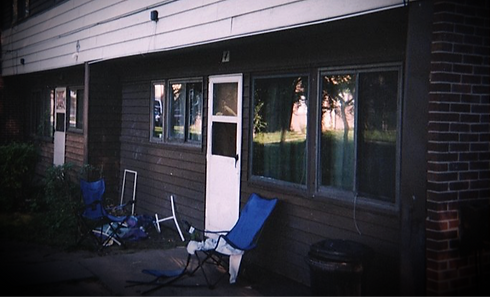
All Trauma has an Origin Story
Mine Started in the Vineyard Housing Projects
What's Wrong With Me?
This question plagued me most of my life. Born and raised in the Vineyard Housing Projects, I have experienced all that came with urban life. Sexual Assault, domestic violence, brutal physical abuse from my mother's alcoholic boyfriend. The ramifications of Vineyard emerged as an adult. A destructive lifestyle including insatiable sexual promiscuity, emotional dysregulation lead to a a failed suicide attempt. Stood before J.A.G. for assaulting an officer, multiple divorces, the death of two sets of twins, and a constant somatic responses leading to countless hospitalizations and surgeries. A disposition of constantly asking, "What's wrong with me?"
A eventual diagnosis finally answered the question. Complex PTSD. CPTSD comes from constant exposure to intense stress, anxiety, and trauma, generally originating during childhood. Read full story Below.
Grab Coffee Story

VINEYARD HOUSING PROJECTS
Recovery Statement
My name is Ken and I am a grateful believer in Jesus Christ and have overcome childhood sexual trauma leading to sexual addiction, rage, and loss. I am currently in the healing process for Complex PTSD.
My Story - His Glory
Before we delve into Stop Living Wounded, I believe you should understand my history. If you’re going to stop living wounded, it helps to know the road that brought me here, because perspective shapes narrative. Knowing Luke was a physician helps you understand why his Gospel reads with the careful detail of a man of science. Knowing Lee Strobel was an atheist investigator helps you understand why his search for Jesus moves like a case file. In the same way, knowing my background will help you understand why Stop Living Wounded was a message long before it became a ministry.
I share this with careful consideration. It is not my desire to trigger anyone’s trauma or pull you back into places you’ve fought hard to escape. I’ve intentionally kept this PG-13 (for the most part), leaving out many details. The goal here is not shock. The goal is context. I want you to understand the depth of my brokenness so you can better understand the depth of my redemption. Okay. Grab coffee and let’s get started.
My life has always been somewhat of a mess. I’m the youngest of three and the only boy. I was born and raised in Benton Harbor, Michigan, a predominantly African-American city in the lower southwest part of the state. During the heroin epidemic of the seventies and the crack epidemic of the eighties, Benton Harbor was positioned as the halfway point between Chicago and Detroit. I grew up in one of the poorest and most violent areas in the city, a government-subsidized housing community called the Vineyard Housing Projects.
My mother only had an eighth-grade education. She was beautiful, and in her younger years she lived like a party queen. My aunt, her younger sister, once told me that men regularly took care of my mother just to have a few minutes of her time. But by her very early thirties, those “sugar daddies” were fading, and my mother found a new provider: the welfare system. She had three kids by three different men in three years. To this day I have no clue who my father is because my mother didn’t know either.
When I was five, my mother began dating a bouncer from a local club. We called him Big Joe. At six-foot-two, he weighed over 400 pounds—towering over my five-foot-two mother. Big Joe moved in, and by the time I was seven, his violent nature began to show itself. Switches, belts, extension cords, shoes—whatever was close became the means of “discipline.” What my rural friends called “whippings,” urban people called a “whooping,” but it was more beatings than discipline and imposing fear than correction.
Around eight or nine years old, I walked home from my aunt’s house and found my door locked. I started searching the projects for my mother at her usual stops. At one particular door, someone told me I could come inside and wait. I had been warned by both my mother and Joe never to go into that house without them, but it was getting dark, and my mind chose shelter over wisdom. That decision led to me being raped.
At that age, I didn’t fully understand what had happened. I only knew something was wrong and that I felt “icky.” I ran into a large ravine behind the projects and stayed there until late nightfall. I was more afraid of Joe’s rage for disobedience than I was able to articulate the violation that had just occurred. So I stayed silent. I told no one. And I carried it alone for years. What I can name now is this: when pain has no safe place to go, it doesn’t disappear—it relocates. It moves into your body, your choices, your relationships, and it starts dictating rules you never agreed to live by.
Perhaps what ruined me even worse was the conclusion I came to afterward: I could never depend on anyone to care for me but me. Something broke in me. I was no longer Ken. I became bro-ken. That brokenness showed up as rage, loneliness, and a lifestyle of excessive lewdness. In eighties urban vernacular, I was buck-wild. So wild that to this day I have no memory whatsoever of when I lost my virginity or who I lost it to. By eighth grade I was deeply involved in orgies. I now understand what I couldn’t name then: I was trying to medicate the pain of childhood assault and the loneliness that followed me into adulthood, and it made me unwilling to love anyone or anything.
Later I learned what many psychological frameworks already recognize: traumatic events can often be processed more safely when a child has a consistent caregiver. Someone who can nurture them through the wound, help them name what happened, restore safety, and teach the nervous system that the world isn’t just danger. I never had a caregiver to nurture my pain. My caregivers were the primary source of my pain. I had a partying mom and her alcoholic boyfriend. I had nowhere to put what happened to me. So I did what many wounded children do. I adapted. I numbed myself and survived by moving on.
By third grade, I rarely stayed at home on weekends because that’s when Mr. Hyde crawled out of Dr. Jekyll. By seventh grade, Joe was a full-blown alcoholic. I spent most of my time avoiding him, staying gone until he fell asleep and leaving the house before he woke up. I still have scars on my face from those years. I witnessed domestic violence too many times to mention, but one memory remains vivid: I watched him drag my mother by her hair like a doll across the floor. Later he passed out drunk on the couch while my sister stood between him and the shotgun my mother had placed over his head. That’s the kind of urban environment that shapes you without asking your permission.
Inside the home, I lived timid and passive. Outside the home, I was angry. The rage that had nowhere to go in the house came out in the streets, in school, in the way I moved through the world. I had formed my own Jekyll and Hyde persona. Most of the time I was the class clown, but at the drop of a dime I could become full-blown enraged. At 15, I had had enough of Joe and proceeded to beat him with a baseball bat after he punched me in the chest. He was angry that I wanted to eat dinner after 6 p.m. (which was strictly forbidden). That summer I stayed in what was called a halfway house for boys, the kind of place they put you when juvenile detention was full. During one of my weekend leaves, I got caught breaking into my uncle’s house with a friend. My uncle was a pastor, and he dismissed the charges. Looking back, that was probably my first experience with grace—favor I didn’t earn and didn’t deserve.
By the time I was a junior in high school, the Jekyll and Hyde persona wasn’t hiding anymore. One day my English teacher called me into the hallway, surprisingly grabbed me by my collar, and slammed me into a locker. She, yes, she, looked me in the eyes and screamed that if I didn’t change, I’d be dead before my twenty-first birthday. I knew she was right. Two weeks later, one of my two best friends, Jeff, approached me about joining the Army together. I said yes immediately. I didn’t know much about the Army, but I knew I had no real path to college and I needed out of Benton Harbor.
At 17, I joined what was then called the Delayed Entry Program and two weeks after barely graduating, I left for Fort McClellan, Alabama. I am 100% confident I wouldn’t have graduated if I hadn’t already joined the Army. Jeff wrote in my yearbook, “To Ken, a cool dude who I love to chase the ladies with. Please lose that temper before we go into the Army.” First—who writes that? Second—I didn’t.
I quickly learned something I wasn’t prepared for. Although I left Vineyard, Vineyard was still in me. The environment may change, but internal wounds don’t automatically relocate. In basic training, I got into three fights. In one of them, someone called me a three-letter derogatory name for a homosexual man, and rage swallowed me in a way I struggled to explain at that time. To this day, I have no memory of the fight itself—only the blood on my hands and boots afterward. I thought I was going to get kicked out. I didn’t. Despite my issues, I was a very good soldier. From Joe, I had learned how to follow strict orders and how to function under yelling without flinching, and that became a key component that followed me: performance-driven pain. I didn’t know it then, but I was building a life where excellence could cover everything except the parts of me that needed healing.
Five months into my first duty station in South Korea, my overseeing sergeant gave me an ultimatum. He told me to take leave and work on my issues. In my mind, my issue had a name: Big Joe. I decided I would go home and kill Joe or Joe would kill me. It had been about two years since I’d seen him, but there wasn’t a week that passed without nightmares of him. I traveled back home in a rage, but was stunned that the man sitting on the porch wasn’t the mountain I remembered. Joe was down to about 160 pounds. He was dying of liver cirrhosis from the misuse of drugs and alcohol.
He looked at me and said, “Come have a seat, son.” Son? He had never called me son. I sat down both confused and angry. I wanted to hurt him but felt sorrow for him at the same time. This was not the person I planned on fighting. I didn’t know what to do with pity. I didn’t even know I had pitiful disposition in me. Joe began with words that both confused me and answered questions I had carried for years. He told me he was hard on me because he didn’t want me to turn out like him. He admitted he had never had a job or a dream, and besides fighting and fear he had no real skills. I returned to Korea not sure what had just happened inside me, only knowing that something shifted. Hindsight shifted me from fear to forgiveness.
Three months later he died. I flew back from Korea for the funeral, shocking everyone. I walked up to the open casket in full military uniform and kissed him on the forehead. Parts of me were not like him but many parts of me were him. Somewhere in that strange moment, the work of forgiveness began. I learned that forgiveness doesn’t always erase the story, but it can break the chains that keep the story replaying.
I never had another nightmare about Joe but even after that, the anger in me didn’t magically disappear. It had a grip on me. Jeff and I were stationed together again at Fort Ord in California. But instead of helping each other grow, we fed each other’s aggressiveness. On one occasion, it went too far. We ended up before a Judge Advocate General for fighting—two of us against seven guys. We had been in a lot of fights, but never fought anyone while still on base. One of the seven was an officer and a pilot. The offense was punishable by up to five years in prison. We were found innocent on a technicality because the officer failed to identify himself as an officer. Walking out of the courtroom with my sergeants and commanding officers, it was the first time I clearly thought, “Something is wrong with me.”
At twenty-one, I was so empty that my drug of choice, sex, could no longer medicate my loneliness. I walked into a dance club and fifteen minutes later asked a woman I had never met to marry me. Two months later we were married. I had never even had a serious girlfriend before because I didn’t see any value in love. To me it was something that made you weak. A year later, we had my eldest daughter. About a year after that, we gave birth to twin boys.
Shortly after that, I was stationed alone in Europe, and my wife was back in California. During those months, my past trauma and present marital strife became unbearable and I attempted suicide. I remember waking up in the hospital thinking, “I can’t even kill myself right.” At that time, a suicide attempt could mean automatic discharge for “destruction of government property.” I wasn’t discharged because, again, I was still an exceptional soldier even being promoted to Corporal a few months prior. I later learned I was the only Corporal in the entire Army in my vocation.
A month after being taken off suicide watch, came what I call, “the knock.” Staying in the barracks, I got a a knock on my door. I opened the door and a sergeant said, “The Commander wants to see you.” My initial thoughts were “Maybe I am going to get kicked out.” I walked into the commanding officer’s office and saw senior sergeants and the chaplain standing there. The chaplain handed me a note from the American Red Cross. It read, “Corporal Yarbrough, we are sorry to inform you that your twin sons are dead.” It was a sentence that split my world. They were five and a half months old. Back on suicide watch.
Days later I flew back to California for their funeral. It was the first recorded incident of twins dying of Sudden Infant Death Syndrome (also know as cot syndrome or crib death). Their gravestone read, “So much love. So little time.” My wife and I struggled to recover and unconsciously blamed each other. We tried to make the marriage work and jumped into another pregnancy way too quickly. Shortly after my son Robert was born we separated and eventually divorced, both still full of bitterness and unforgiveness.
Years later I was now a Sergeant, again stationed in Korea, when a rotating gospel chaplain came to our base. I was a strong atheist who constantly expressed the stupidity of religion, but I followed the crowd to the service. Half asleep in the back pew, I watched him stop preaching, walk off the pulpit, and come right to me. He asked my name and where I was from. He then said God had a word for me. I don’t remember much as I was fighting anger because I perceived it as disrespect. I do remember this line as it broke through my anger: “God has called you. You need to stop fighting and answer His call.” I didn’t know what that meant and I didn’t care. But it stayed with me.
Eventually I was stationed in Arizona. I was back to old habits—debauchery, depravity, trying to medicate my demons with the demonic. I found out I made Staff Sergeant and reenlisted for it. Days after reenlisting, a soldier in another company told me she was pregnant. I still remember my cold, heartless statement to her, “Whatcha go do?” The next day she asked me to take her to an abortion clinic in Tucson. I drove her and her friend but sat in the car as they went in. I didn’t believe in God, so I didn’t feel any “religious remorse.” But sitting there, something started stirring. For some reason, I began to reflect on being raped. Memories I thought were buried came rushing back. I suddenly realized the guilt was about innocence.
My childhood innocence had been stripped in the projects and I was now participating in terminating a child who never asked to be conceived. I immediately reached for the door handle to go inside, but as soon as the door opened, they were walking out in tears. We drove back to Ft. Huachuca in eerie silence. I didn’t know what to do with what I felt. I had done some brutal and sadistic things with no remorse whatsoever. That Monday I went to the senior sergeant and asked to be discharged before ever making my next rank. That was 1992. I never shared that experience with anyone until 2023.
A few years later my mother, a smoker since she was eleven, died of lung cancer. I didn’t cry when she was hospitalized. I didn’t cry when she died. I didn’t cry at her funeral. I didn’t cry because I didn’t care. Three years after my military discharge, a live-in girlfriend became pregnant—with twins. We got engaged and I went to my uncle, the same pastor whose house I tried to rob as a teen, because I wanted to do marriage “right” this time (whatever that meant).
He went on a rant about living together and conceiving a child in sin. I fought the rage, stood up, and walked out hating him and a God I didn’t even believe in. I was trying to do right and he was telling me how wrong I was. The twins were born at six and a half months. The first died twelve hours after birth. The second died twelve days after birth, dying in my arms as I nodded for the nurse to turn off life support. Holding my son while crying, I asked myself, “Was this punishment from my uncle’s God?” I didn’t even believe in God, or a god, but I hated Him all the more.
I quickly walked away from that engagement and dove headfirst into my medication of choice—sex, orgies, drinking, escape. Two years later another pregnancy led to another marriage. Although I wasn’t in love with her, I would never go through the agony of an abortion again. Four years after my son Kenny was born, that marriage was ending too. My family had begged me to leave her alone but I would not abandon my son. This breakup was different because for the first time in my life, I wanted a relationship to work. It hurt so badly that I lost so much weight I could wrap my fingers around my arms and they touched.
However, instead of running back into my medication of choice, I ran into Mt. Zion Baptist Church in Kalamazoo, Michigan. After the Bible study, Pastor Addis Moore listened to me for almost an hour and talked with me about my life. He reminded me of the lesson that night from The Purpose Driven Life. He told me God had been trying to make Himself known and that if I allowed it, God has a call on my life He would eventually reveal. I immediately remembered the gospel preacher from years earlier.
Addis explained a call is the purpose for which God formed me. I don’t know if I believed all the religious stuff that night, but the idea of purpose struck something in me. Like Solomon in Ecclesiastes, everything felt meaningless. I accepted Jesus that night, still unsure if I really believed it, and six months later I was in pastoral training even though I honestly didn’t really know what a pastor was.
Life began turning around in visible ways. After completing dual bachelor’s degrees, I was recruited by Dr. Ruth Hamilton and became a doctoral student in Sociology and Religious Studies at Michigan State University. Things were going well both in school and in ministry. I was finding peace, trying abstinence with some success. I had been in the program for almost two years. In that two years, Dr. Hamilton’s graduate team tailgated and had gatherings at her house.
Dr. Hamilton was tough and we bumped heads often. She never backed down from my anger and she never told me to get rid of it. In fact, she taught me how to use it to drive me into success. She once yelled at me, “Use that mouth of yours to write better papers and present better arguments.” I burst out laughing understanding she was not intimidated by the sergeant still dealing with anger issues.
One night during a Bible study I received multiple phone calls in a row. I stepped out and returned the call. Dr. Hamilton’s administrator was sobbing. She said, “Ken, Ruth has been murdered—stabbed over twenty times by her son” who was high on meth. I was stunned. Shocked. I immediately thought, “Superwoman can’t die.” Then I thought, “God, give me a (beeping) break.” Like so many times before when faced with pain, I ran. I dropped out of the program. Eventually MSU offered me a path: finish three remaining classes and write a short fifty-page thesis, and they would award me a Master’s. This felt stupid at the time. I did doctoral level coursework and research and all I got is a Master of Art to show for it. But, yet again, grace showed up in the middle of collapse.
I later met my current wife of almost 19 years in church leadership training. About a year into our marriage, I started a PhD in Biblical Counseling, my daughter Grace was born, and we moved to Houston to plant a church. Things again began to turn around. About two years into the plant, my health began falling apart. A cough became phlegm. Phlegm became blood. My oxygen saturation began dropping fast. My lungs struggled to function; in addition, I had multiple spinal surgeries piled on top. The lack of oxygen began to affect my physical ability (hypoxemia) and mental stability to the point of insanity (hypoxia). The eventual diagnosis was Acute Bronchopulmonary Aspergillosis.
Struggling with insomnia brought on by the fear of not waking up, I would go for short walks in the early morning. It was also the best time for me as the Houston humidity was low enough to tolerate. Crying and deep into my pity-party at about 3a.m., I yelled at God for all that I had been through, and all that I was going through. It was the second time I swore I heard God’s voice, “Stop Living Wounded.” Stop living wounded? I screamed back, “I am not living wounded, I am wounded and you’re not helping!” Ten years after moving to Houston, my Veterans Affairs respiratory doctor told me I had to move to Colorado or Utah. We chose Colorado.
When I arrived in Colorado, I was on fourteen medications, including organ transplant-related meds in an attempt to strengthen my lungs, and I was wearing a heart monitor for palpitations. A year later I was so mentally and physically wrecked that I sat on the edge of my bed with my gun in my hand. It felt like it was either suicide or abandoning my family. I got up and chose to leave. Not because I didn’t love them, but because I believed my wife could do better than a man who felt like he was constantly breaking down. I packed up my truck and drove toward Michigan. On a highway in Kansas City, I pulled over and screamed at God, “Where are You?” And I sensed Him say, “I am back in Colorado Springs. Go home.” So I turned around.
After months of intense counseling, my counselor told me to go to church and find volunteer work since working proved difficult. I did, and eventually became an intern at New Life Church. My health was starting to stabilize when Pastor Jeff, who oversaw the Care Department, asked me to lunch. He asked what I knew about Celebrate Recovery (CR). I told him my experience and said I didn’t need it. He laughed and said no, he wanted me to help him and Pastor Christine start one.
I thought I was helping start a ministry. I didn’t realize God was going to use it to restart me in ministry. CR’s second principle says, “Earnestly believe that God exists, that I matter to Him, and that He has the power to help me recover.” I desperately wanted to believe that. I had been broken for so long. Planting CR forced me to examine my life in ways surface attendance or counseling never did. God slowly reintroduced me back into ministry, and I was eventually hired as New Life’s first Pastor of Recovery during the initial start of COVID.
With an already compromised lung and immune system, I caught COVID and started dropping fast.
None of the doctors in Colorado Springs knew how to treat my lung condition, so my wife, dealing with extreme COVID herself, drove me an hour away to the VA hospital in Denver. My oxygen was in the mid to upper 80s when I checked in. A physician tried to get me to sign paperwork in the event of death. Barely able to speak, I told her, “I will not die here as I have not fulfilled my purpose yet.” Five days later I walked out to the disbelief of the entire medical team. In fact, they were clapping as I was being wheeled out because everyone with my initial numbers died. Let me just offer a commercial here; purpose is power (more on this throughout this in the following chapters).
Around that same season, my wife and I were doing foster care. During one visitation the father of the kids we were fostering was high and got inches from my face, screaming threats. I knew that level of rage. I calmly told him I didn’t want his kids and warned him that anger like that would eventually catch up with him. Two weeks later both he and the kids’ mother were shot. The mother died instantly and the father was in ICU. It became the first case of parental homicide involving foster kids during COVID. We had to walk our foster kids through the ordeal while trying to make sense of it ourselves.
I started a second doctorate in Pastoral Counseling. A year into it, I experienced acute pain that made all the previous spinal surgeries, hernia surgeries, and COVID feel trivial in comparison. One Sunday after church, I was on the tear-down team. I had just told a volunteer I was looking forward to riding my bike for the first time in years. As I turned to leave, I saw another volunteer struggling with the large 85-inch lobby television (our church set up in a school). I set my bag down and went back to help. Because of a faulty safety pin, the TV slammed down and mutilated my finger. I have been in pain before, but it was excruciating at a level I still struggle to describe.
Over the next week, nearly three-quarters of an inch of my dominant-hand index finger had to be amputated. And that pain didn’t just hit my body. It began to set me back mentally. I couldn’t make sense of it. Eventually attending a CR meeting again, the screen read Matthew 5:4: “Blessed are those who mourn, for they shall be comforted.” I remember thinking, I don’t want comfort. I don’t want a pillow on a thorn bed. I don’t want well-being. I screamed at God, “I want You to help me understand all this!!!”
A month later I returned to work. A few weeks after that, I was still struggling. The tip of the index finger has more than 100 times the pain receptors than any part of the body. In addition, I refused to get entangled in opioids. In life, and CR, I have seen the result of that addiction that started because of pain. This didn’t make sense. I accepted my call. I am reading the book and attend the bible training. I have the training and license of a pastor. What more do you want from me God? This is ridiculous. I had spent eight years in the Army and I got injured at church.
After service one Sunday, a member named Jill walked up and asked how I was doing. I tried to respond cordially, but inside I was exhausted with people telling me they “understand my pain.” How could anyone understand this level of pain? As I fought back both anger and tears, Jill said, “Pastor Ken, I do understand,” and she held up her hand. The same finger on the same hand looked exactly like mine. The anger left instantly as the tears poured out.
At first I didn’t understand why I was crying so hard. Then it hit me. Someone finally understood, not because she took a class or watched a video on pain receptors, but because she lived it. She didn’t just get the injury; she got the experience. She got me. And in that moment God showed me something I didn’t see before: shared wounds don’t just remind you what hurt—they remind you that you’re not alone, and sometimes that is the first real step toward healing. Someone had a wound similar to mine. Someone knew what it felt like, and in her own way, someone said it’s okay to stop living wounded. That moment became the basis of this book and, in many ways, my ministerial call: to stand before others and hold up my wounds and scars and say, in the language of compassion and truth, “I do understand.”
I think about Thomas in John 20. Jesus doesn’t argue him into faith. He doesn’t shame him into trust. He shows him His wounds: “Put your finger here; see my hands… Reach out your hand and put it into my side… Stop doubting and believe.” Jesus holds up His scars and invites Thomas to stop living in doubt and start living in belief. In a strange way, that’s what Stop Living Wounded is—Jesus showing His wounds so we don’t have to live trapped inside ours. I eventually came to realize that Stop Living Wounded was God’s way of telling me not just to believe in Him, but to live like He is my Lord and my God, and like I am His child. Yes, my life has been one traumatic story after another, but it is no longer a pity party. Pain no longer commands me. Solving the problem of pain is not about pain-avoidance. It is about refusing to allow pain to shape my disposition. While my story includes woundedness, the gospel message is healing, restoration, redemption, and reconciliation—not because I read it or took a class on it (although I have), but because I have experienced it firsthand. Healing is possible, but it is hard work.
So why did I open this book with my healing journey? Because my story is His glory—and so is yours. And even though I wouldn’t wish my life on anyone, as everyone has their own journey, I can say this honestly: I wouldn’t change it for anything. I am not defeated, and I am not a victim. As painful as it has been, I still believe trials are not just setbacks; they can be setups for purpose and destiny. If you’re wrestling with your own hurts, hang-ups, and habitual tendencies the way I wrestled for years, ask God to remove what is breaking you, understanding that healing is a divine partnership. That is, God cannot break the chains we keep welding back together. Stop Living Wounded is not just about Him taking your pain and wounds, but it is also about your willingness to give Him your pain and wounds.
Healing is not a quick fix; it is a journey you stay committed to, even when progress feels slow and the questions stay loud. As Dr. Terry Wardle says, “We have been healed, we are being healed, and we will be healed.” In the tradition of Celebrate Recovery, my name is Ken. I am a grateful believer in Jesus Christ, and I am in recovery from sexual trauma, grief and loss, anger and rage that led to sexual addiction and Complex PTSD. Thanks for letting me share.